
Restore from Backup File
Restoring from a known-good backup from the command line
Unless you've lost access to your Snipe-IT UI, you can use theBackup and Restore tool within the GUI and skip this part.
NOTE:This command is intended for official Snipe-IT generated backups ONLY. If you are trying to restore from a manually generated database and filesystem backups (using PHPMyAdmin,
mysqldump, etc), this command will not work unless you recreate the structure of the zip file that Snipe-IT generates.
If you have a previously generated Snipe-IT backup file that you'd like to restore back to (for example, if you did a backup right before a big LDAP sync, and you realized the sync wasn't configured correctly and you need to roll that back), you can use the command-line utility to restore it to a known good state:
# Restore from backup file on the server
$ php artisan snipeit:restore /full/path/to/your/backup.zip
There are a few additional optional parameters you can also use.
Force Restore (no interaction)
# Restore from backup file on the server without interaction
$ php artisan snipeit:restore /full/path/to/your/backup.zip --force
This will force the restore without asking you to confirm by typing Yes after the prompt.
No Progress Bar
# Restore from backup file on the server without a progress bar
$ php artisan snipeit:restore /full/path/to/your/backup.zip --no-progress
This will hide the progress bar in the terminal.
Run Migrations
After the restore, run:
# Run database migrations
$ php artisan migrate
Assembling a Snipe-IT Compatible Backup File
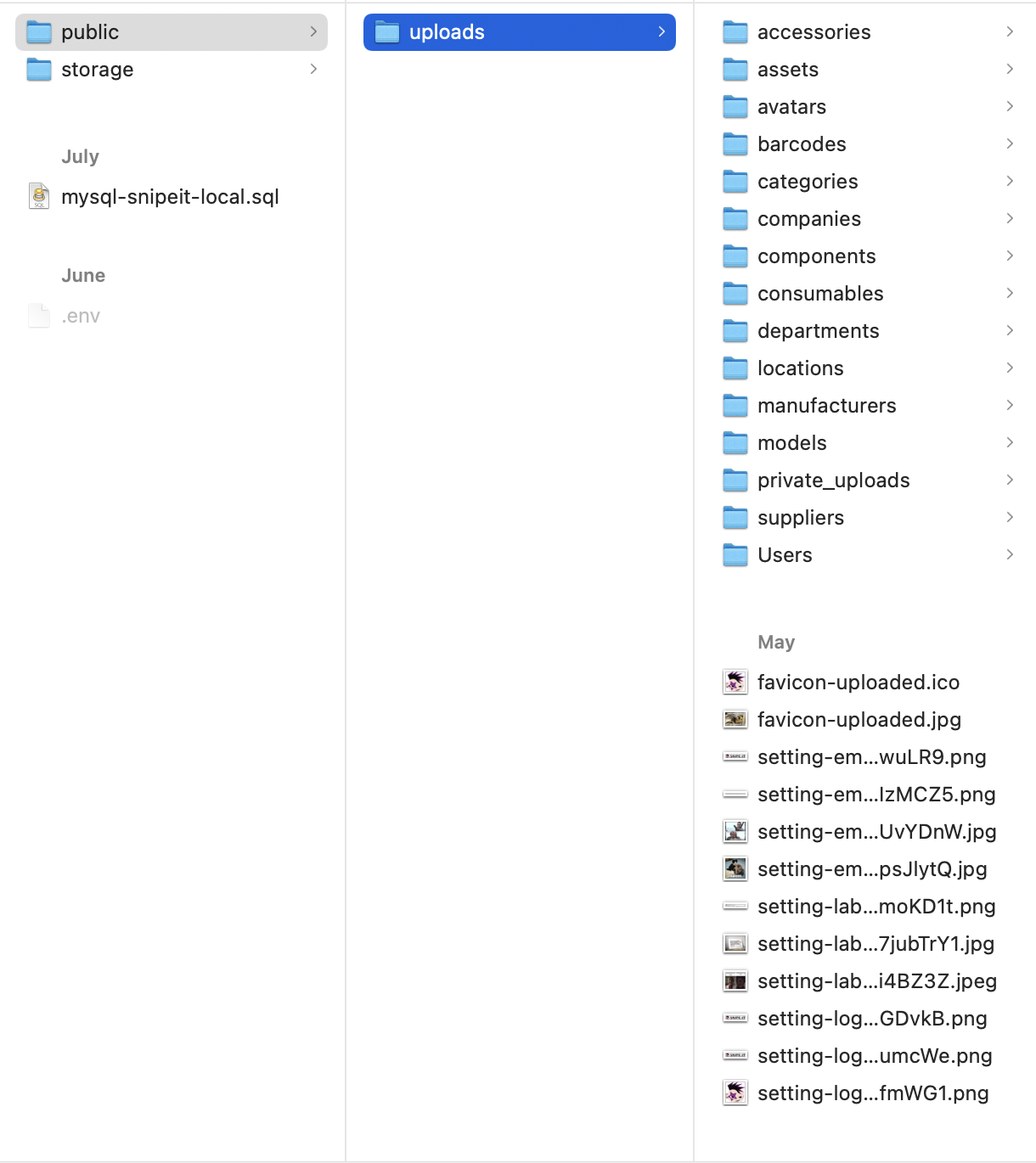
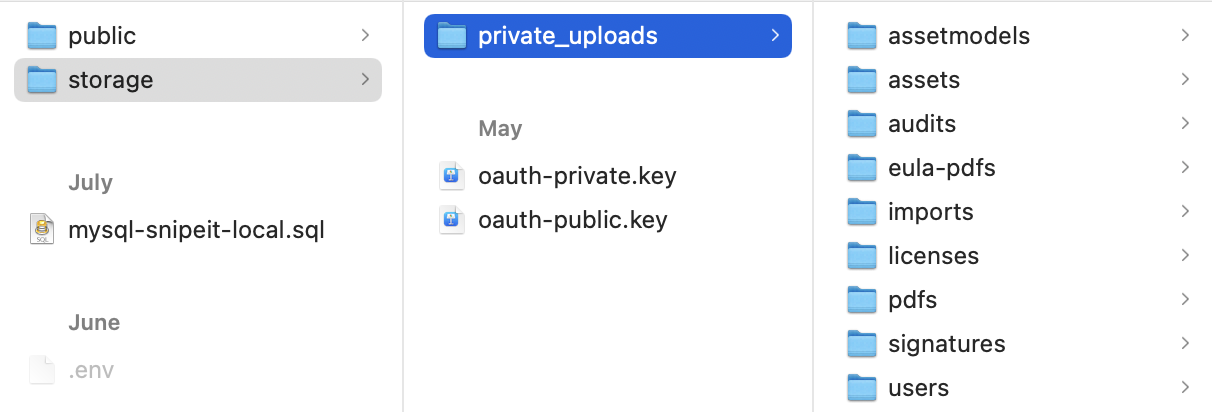
If for some reason you can't get the Snipe-IT-generated backup to work (and for example have to do a manual database dump, etc), the file structure Snipe-IT is expecting in the .zip file you can assemble it yourself:
- SQL file should be at the top level. It can be named anything, but must end in
.sqland there must only be one. - You should have a
public/uploadsdirectory (with subdirectories) and astorage/private_uploadsdirectory (with subdirectories). - Anything else in the zip file will be skipped.
Updated 6 months ago